Dissertation Research: Biological Maturation, Talent Selection, and Physical Performance in Gaelic Games
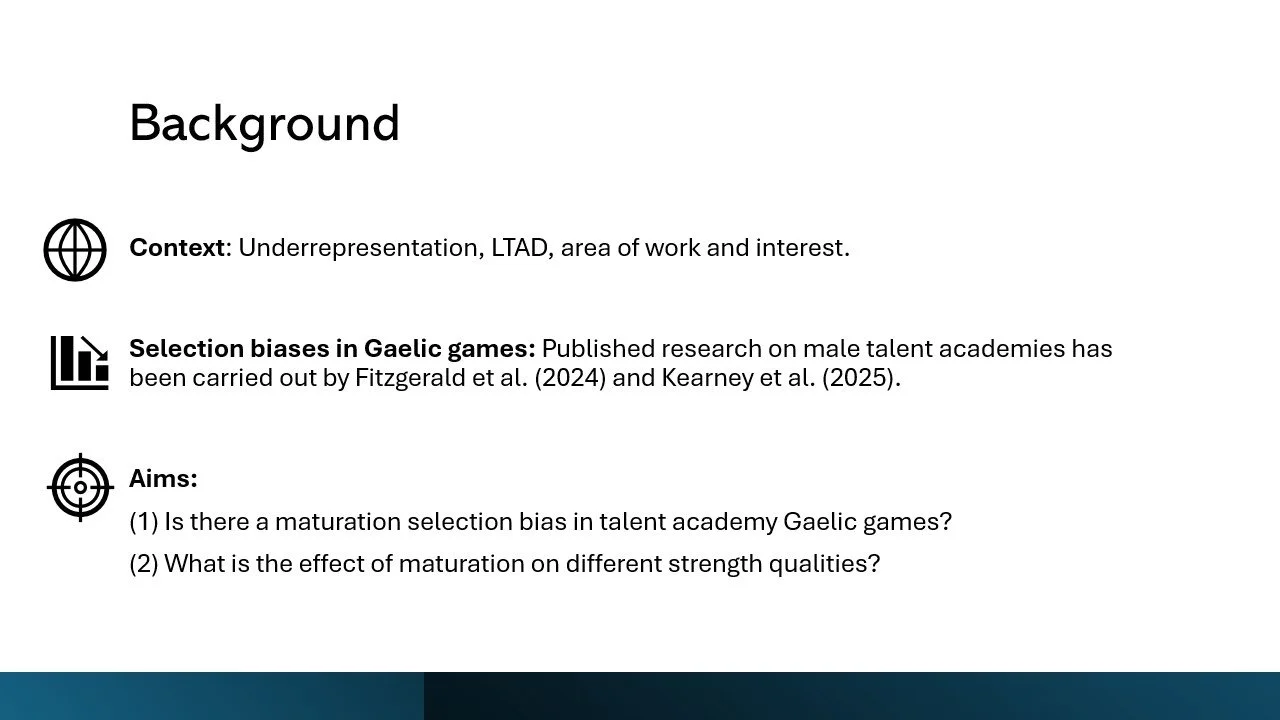
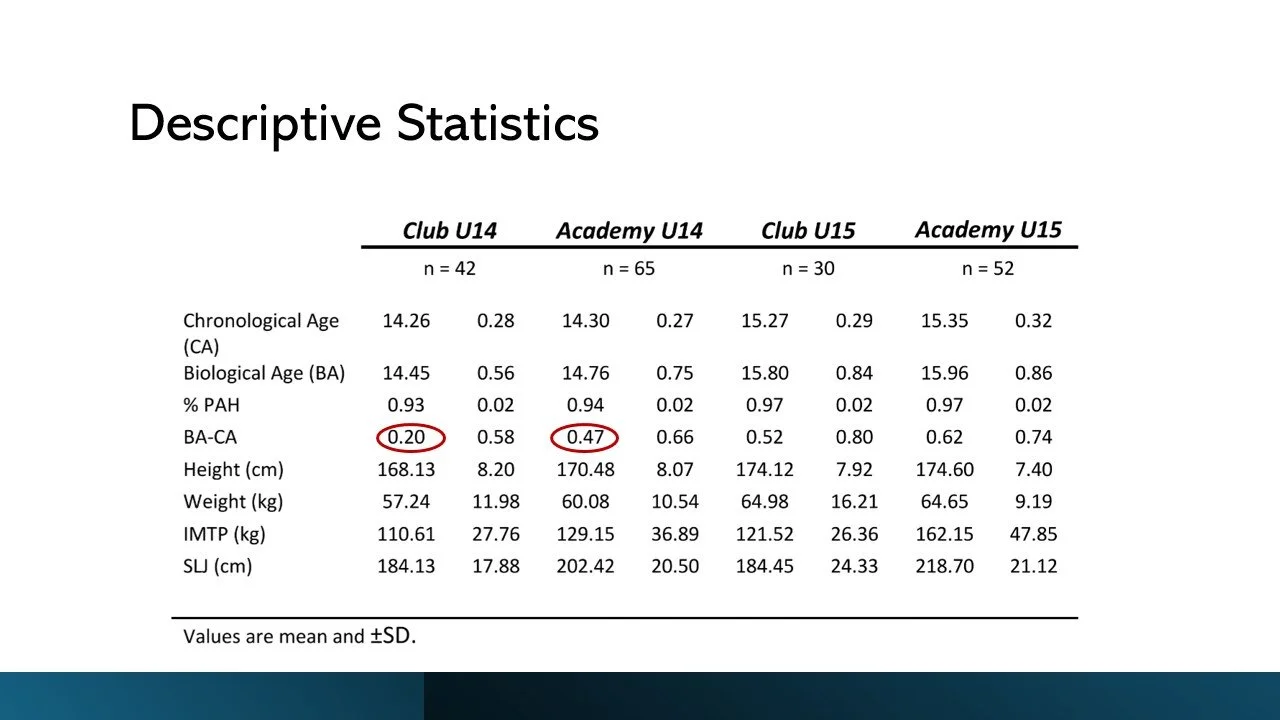
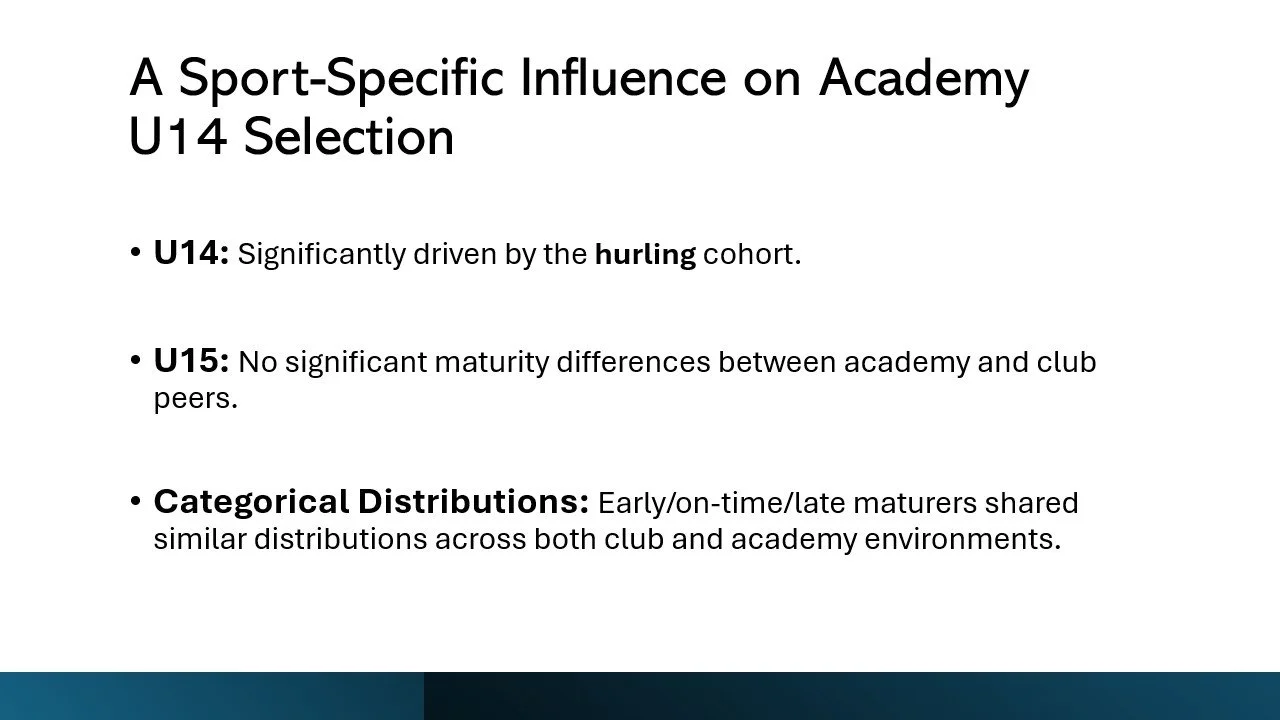
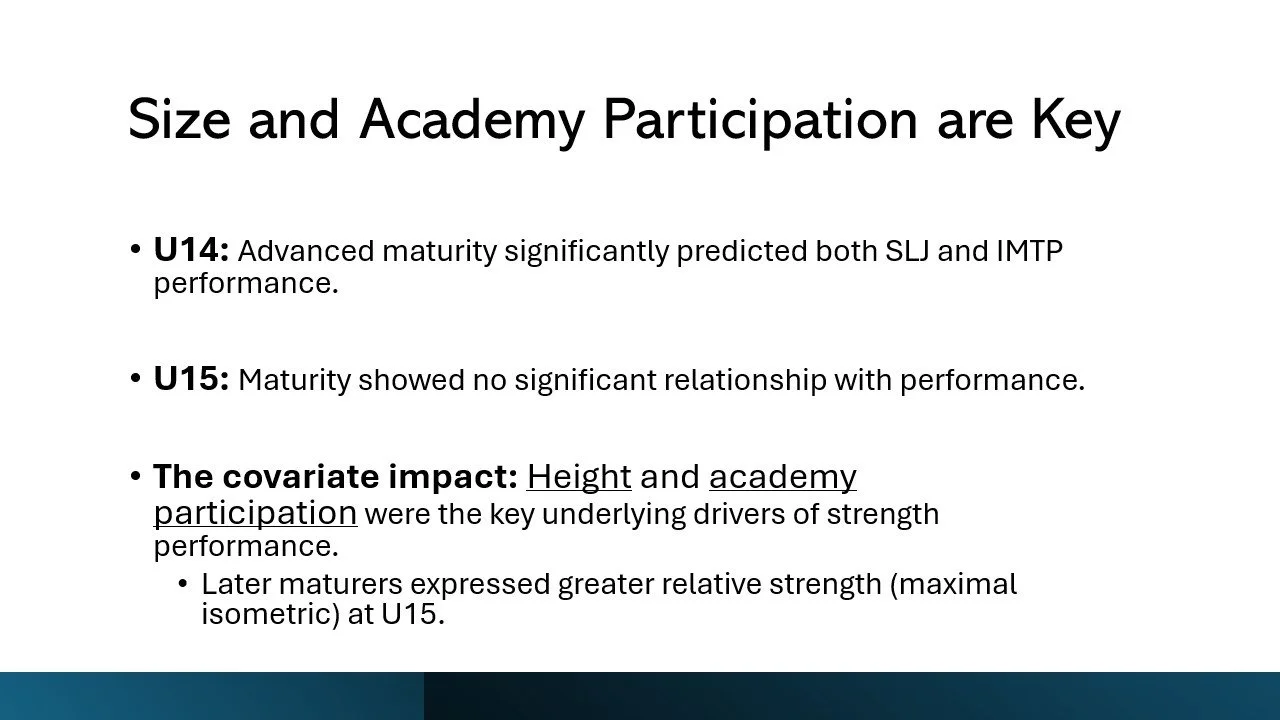
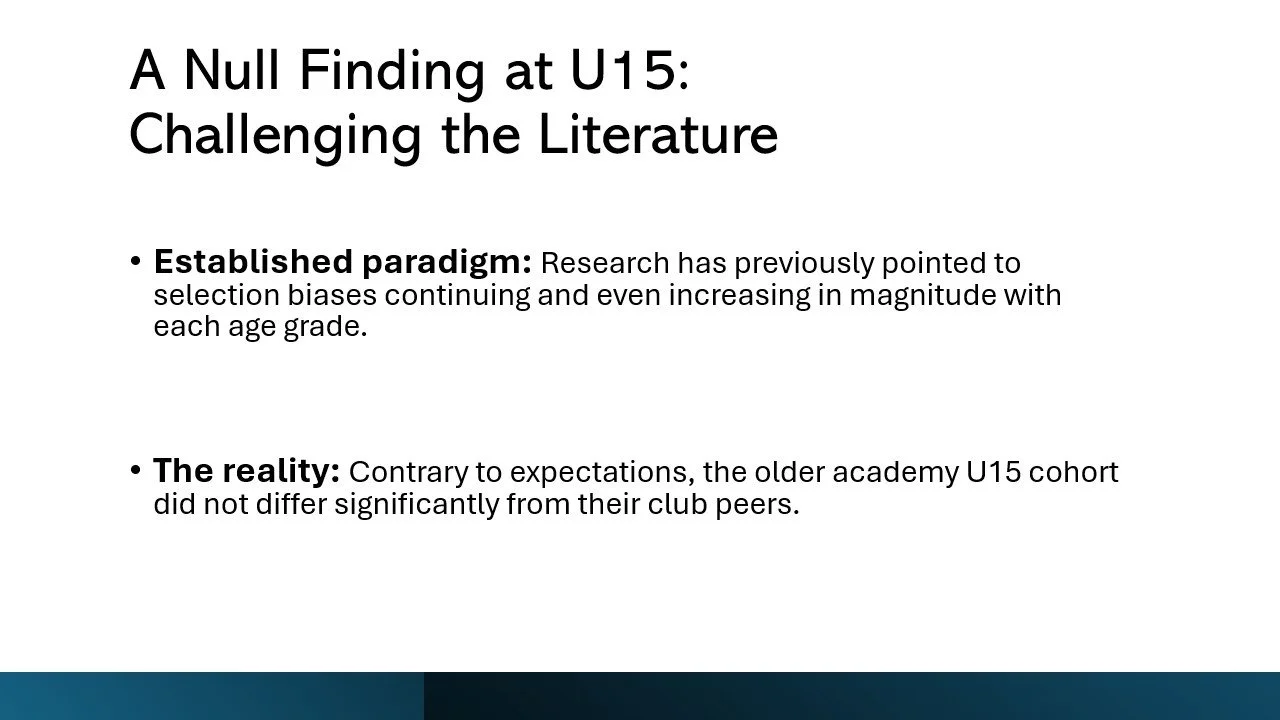
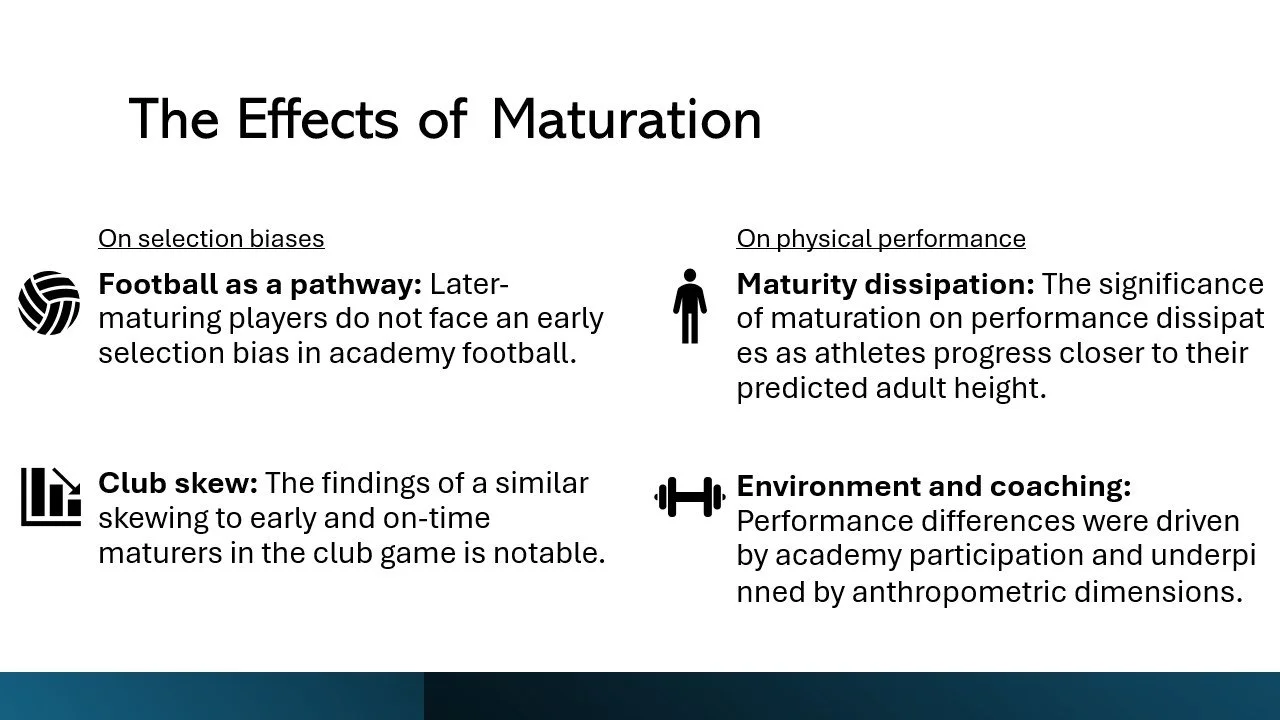
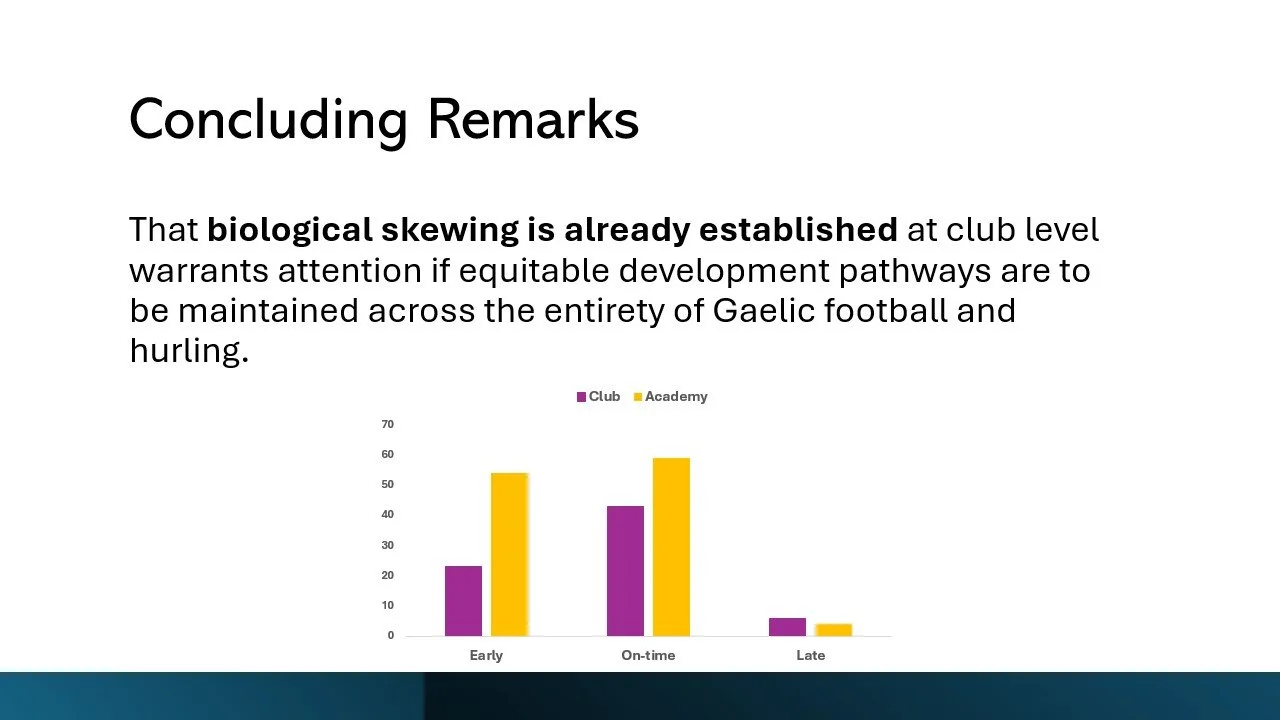
Overall, the findings indicate that biological maturation exerts a strong, sport-specific influence on academy selection and performance at the U14 level. However, this biological advantage completely diminishes by the U15 stage, where performance differences are instead driven by environmental factors – namely, academy participation – and underpinned by anthropometric dimensions. Considering the lack of published research on club Gaelic games to date and the limited club player pool in this study, further research is recommended to explore the biological maturation profiles at club level. While strategies such as bio-banded games, systematic monitoring of maturation, and coach education are already taking place within the academy setting to drive long term athletic development across all maturity profiles, similar initiatives may need to be explored further at club level. That biological skewing is already established at club level warrants attention if equitable development pathways are to be maintained across the entirety of Gaelic football and hurling.
Get in touch if you’d like a copy of the paper
Below are the slides from the above presentation