Strength comprises different qualities. And the development of those different qualities is just one part of a well-rounded programme of athletic development.
Sometimes I hear very narrow interpretations of strength. 🛑
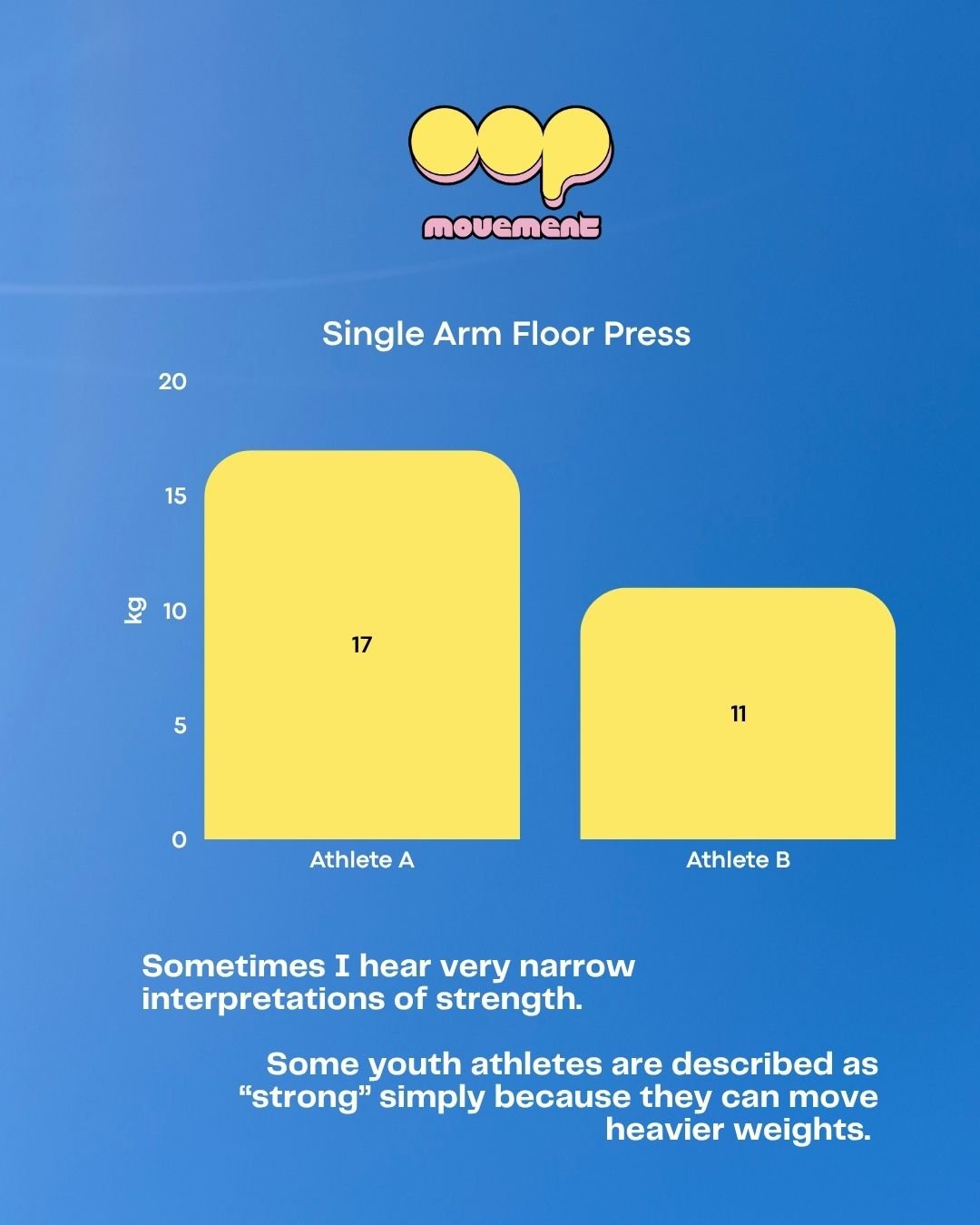
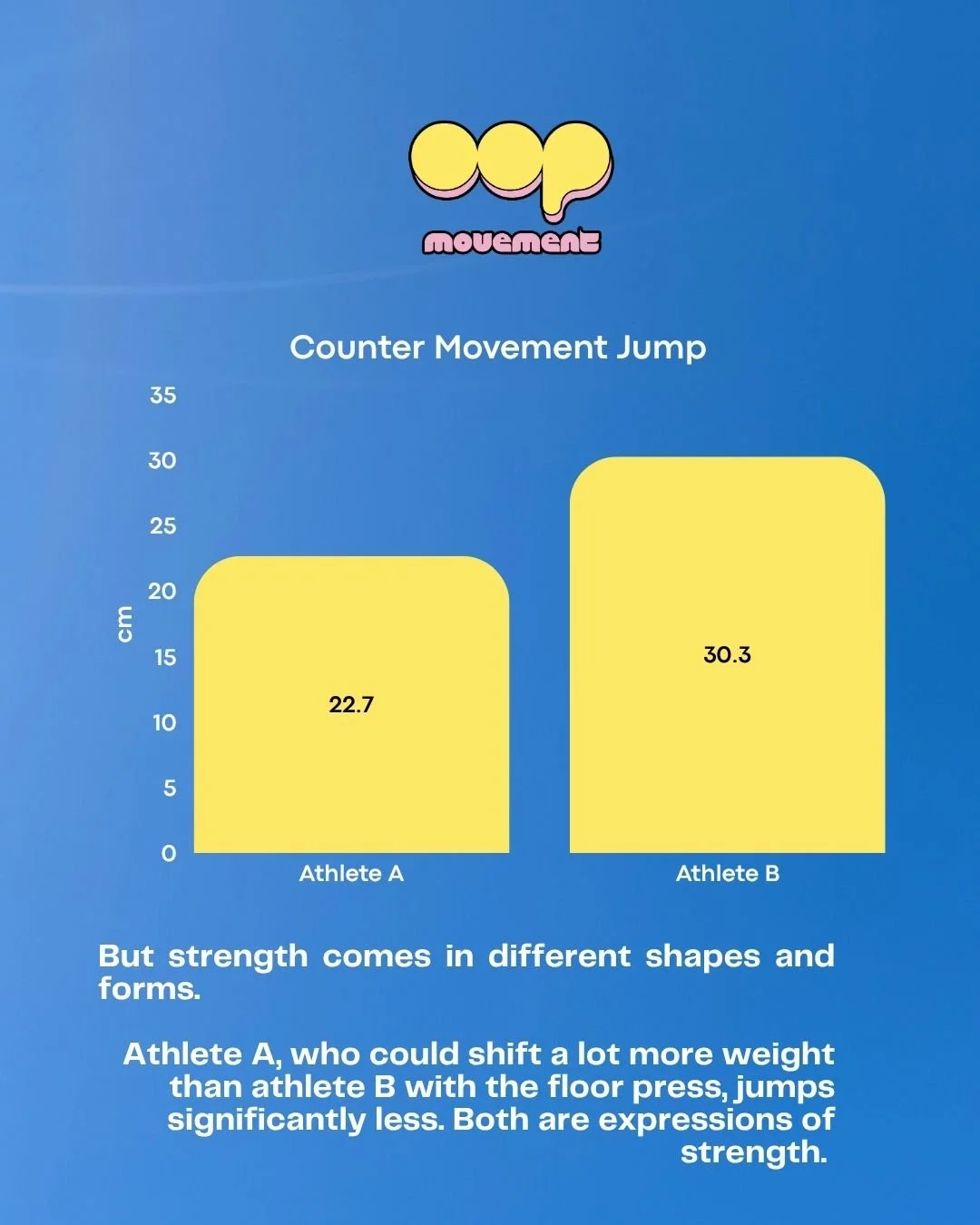
Some youth athletes are described as “strong” simply because they can move heavier weights. But strength comes in different shapes and forms.
Take these two athletes from my baseline data:
• Athlete A shifts a lot more weight than Athlete B with the floor press.
• Yet, Athlete A jumps significantly less than Athlete B.
Both are expressions of strength.
Think of strength in its different forms. For instance, heavy dynamic with the floor press is one expression. Fast dynamic with the countermovement jump is another. ⚡
Some youth athletes considered strong are weak in certain areas, and those considered weak can be strong in certain areas.
Keep in mind that strength ≠ athleticism.
Strength supports athleticism. Athleticism is the ability to perform a range of different movements with skill and confidence in a variety of different environments.
We train the multiple components of athleticism concurrently – motor skills, strength in its different forms, speed, agility, balance, and coordination – so that athletes develop well-rounded athletic profiles at a young age.
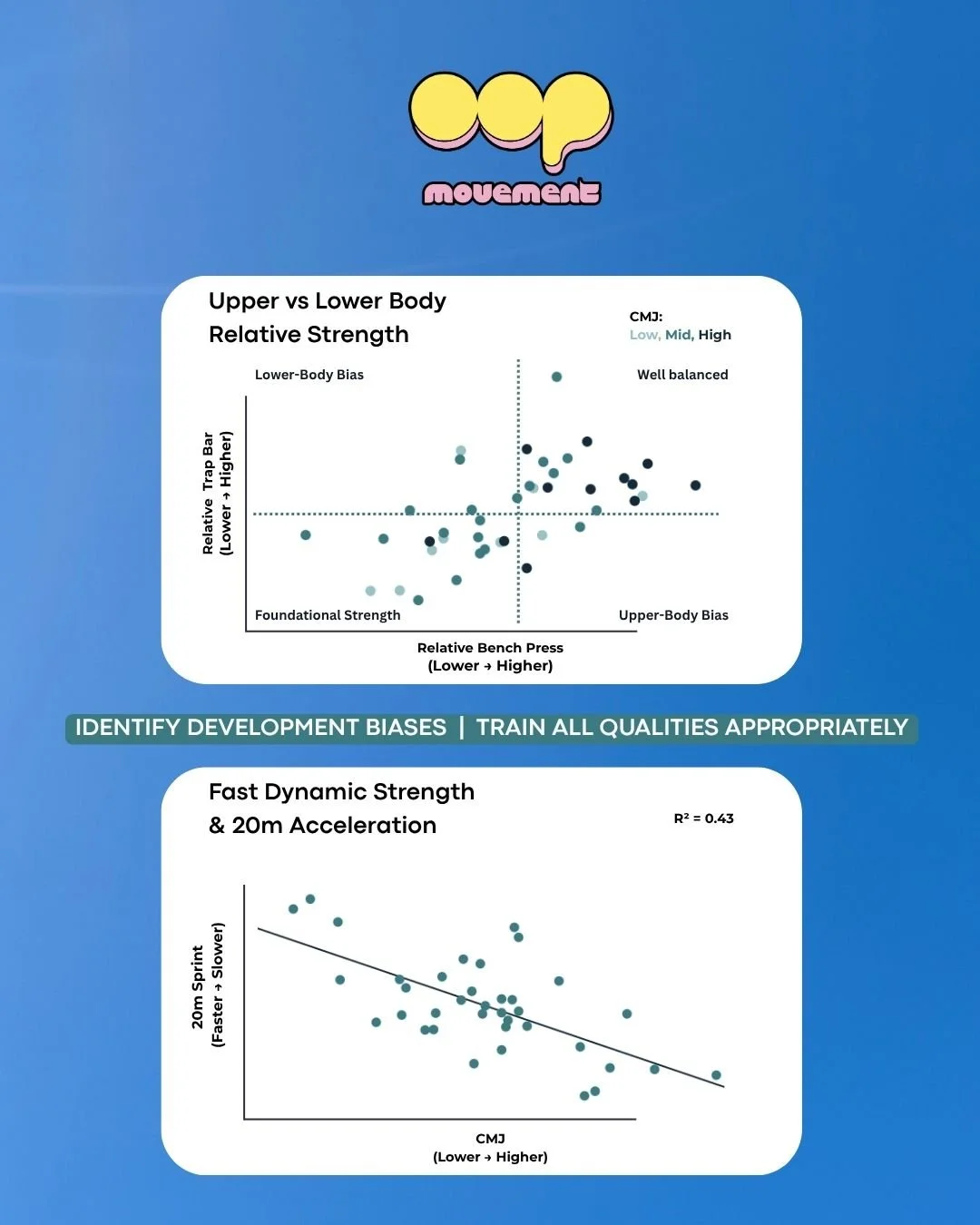
Test data captures what an athlete can do in specific tests – but the context behind those numbers, and the things that aren't easily measured, also matter.
Looking at the charts here, it’s possible to spot patterns – like an upper- vs. lower-body bias, or how jump output (CMJ) tracks with 20m acceleration.
But in interpreting the data, we have to ask:
• What is the athlete’s training age?
• Are they training with a qualified S&C coach?
• What does their training actually look like year-round?
Do the results reflect true athletic strengths built on well-rounded training and play? Or do they highlight imbalances caused by overinvesting in certain qualities while neglecting others?
As a rule, regardless of the biases shown, developmental athletes need a balanced mix of general athletic training: sprinting, mechanics, jumps, full-body strength, movement variability. This approach raises both the floor and the ceiling of athletic potential.